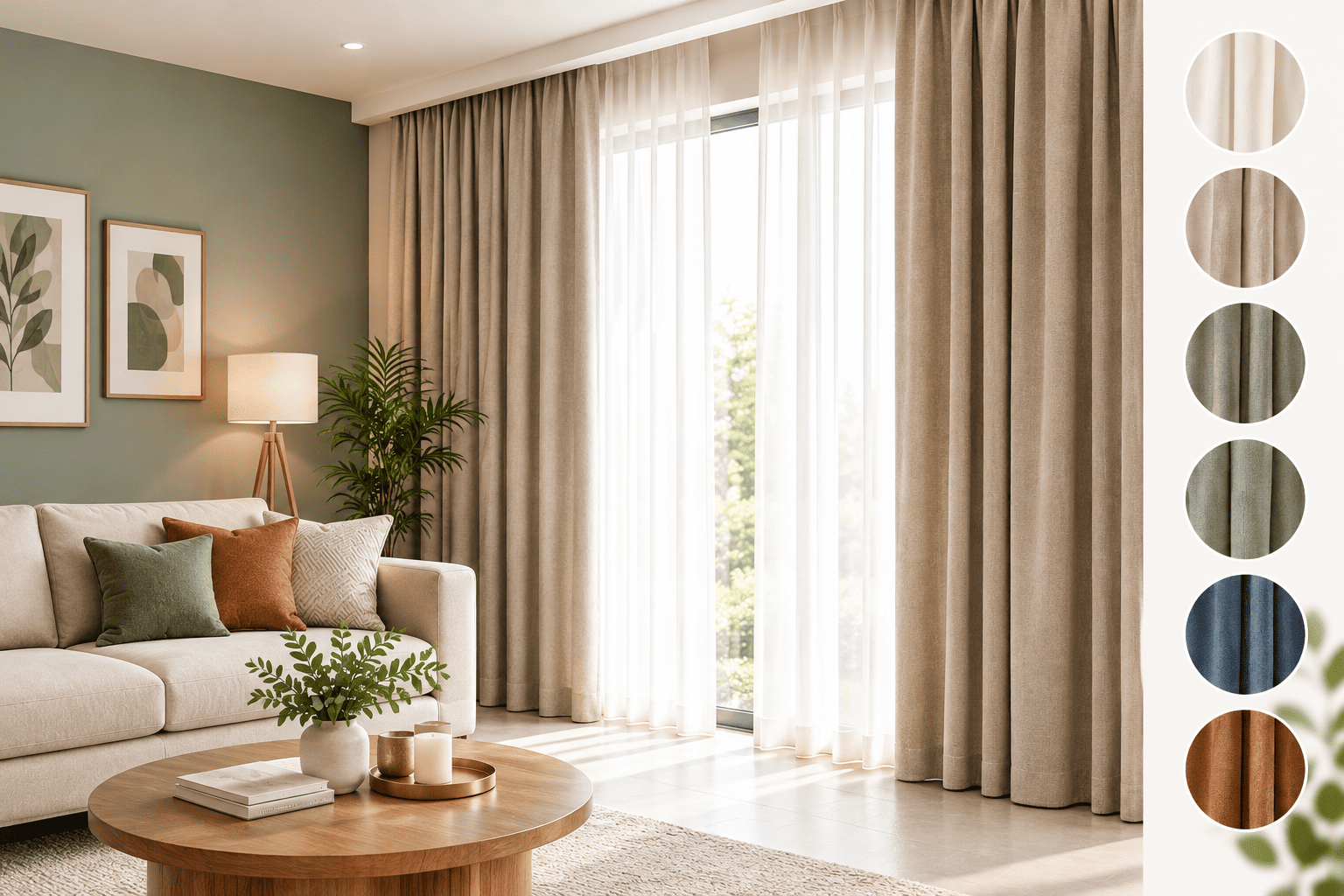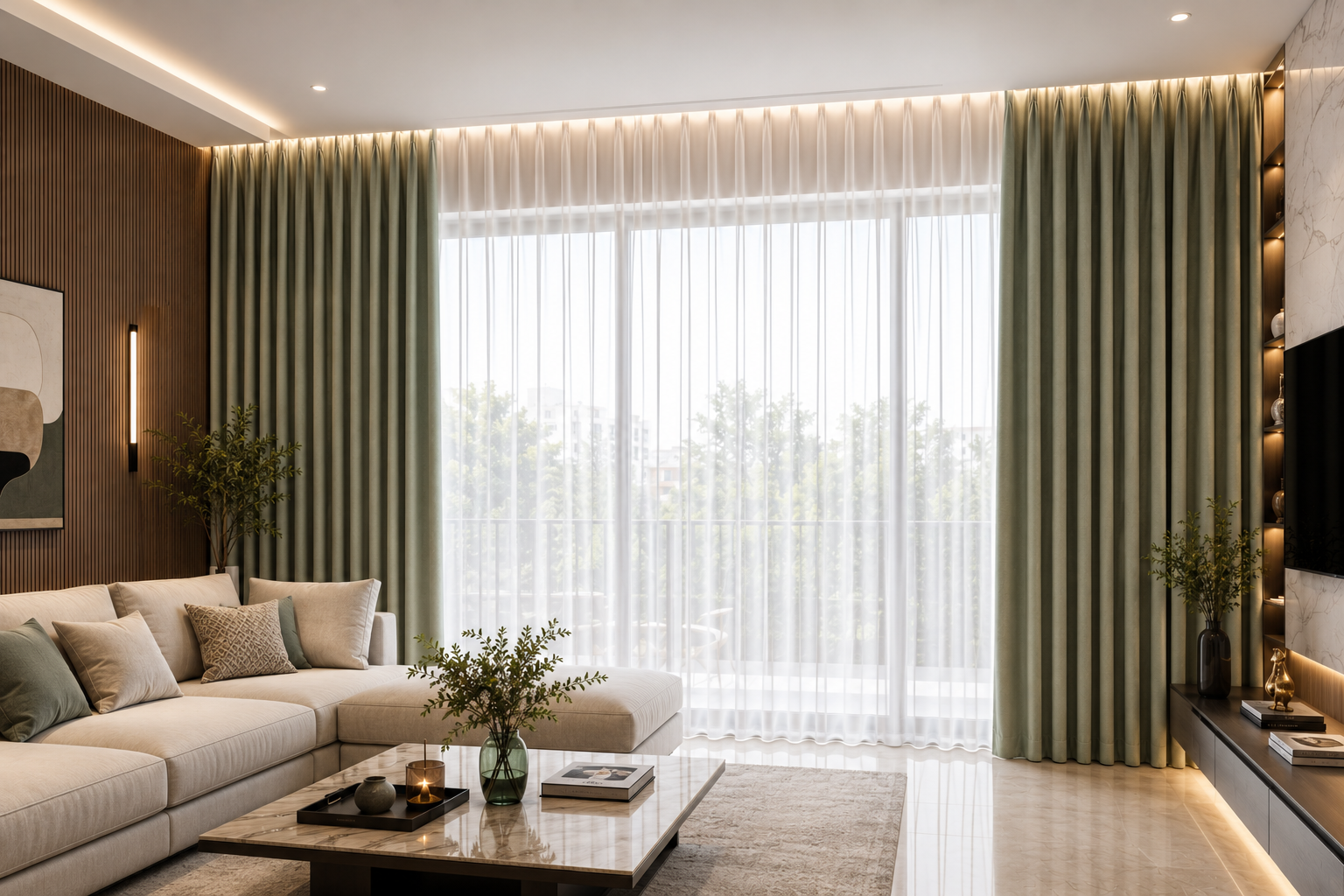
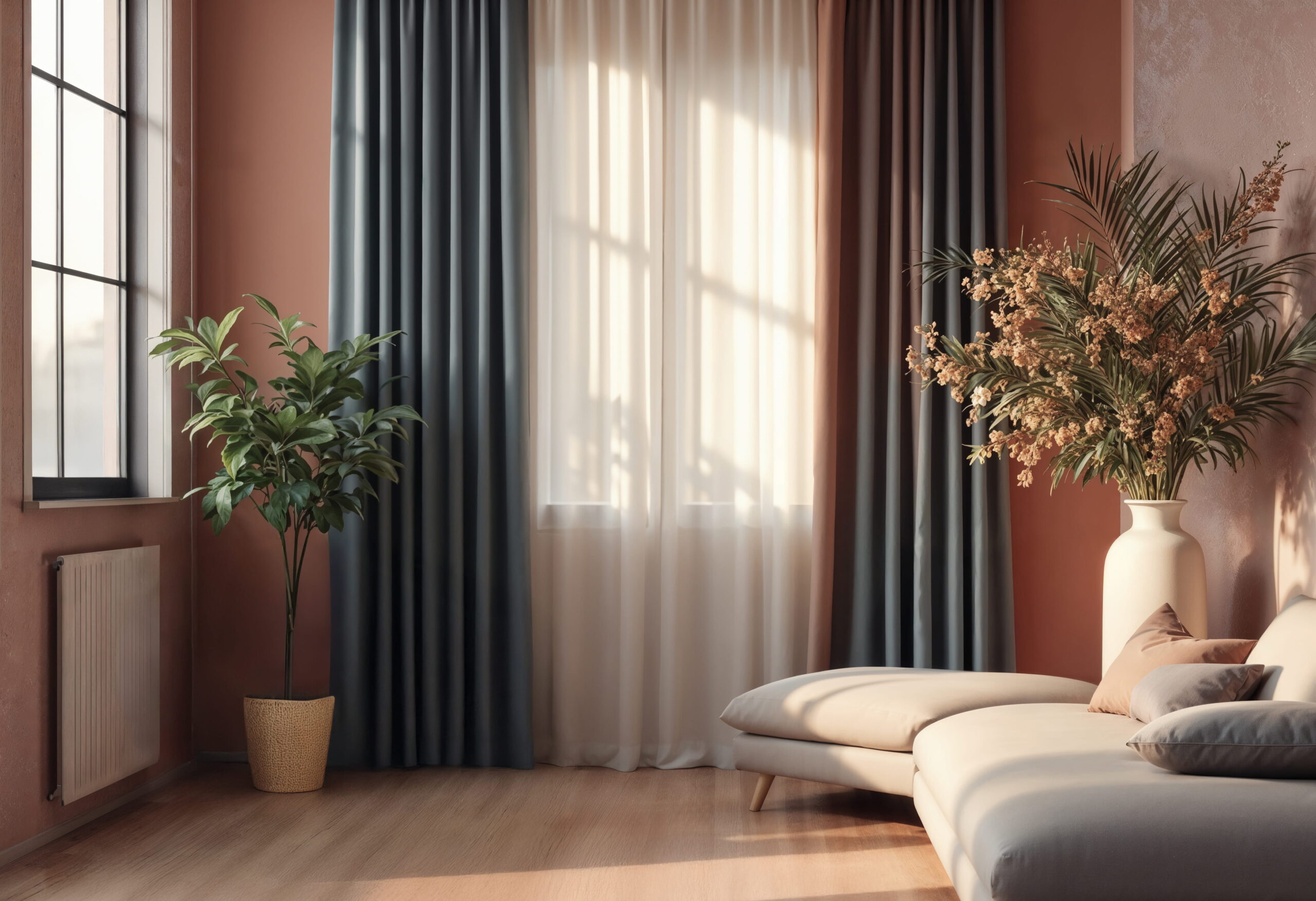
When choosing curtains, most people begin by looking at colours, patterns and designs. However, there is another decision that deserves just as much attention: the fabric itself.
Two curtains may have almost identical colours, yet look and behave completely differently once they are installed. One may fall into soft, flowing folds, while another may appear stiff. One may retain its appearance for years, while another may gradually fade, sag, shrink or become fragile after prolonged exposure to sunlight.
The difference is not simply about price or appearance. It depends on the fabric’s composition, weave, weight, finish, lining and the conditions in which it is used.
At Zed’s, we believe that choosing curtains involves understanding not only how a fabric looks in a showroom but also how it is likely to behave in your home.
In this guide, we explain common curtain fabric types, their practical characteristics, where they work best and what you should consider before making your selection.
1. Why Does Curtain Fabric Matter?
Curtain fabric influences several aspects of your room, including its appearance, comfort and everyday practicality.
Before selecting a fabric, consider these five factors.
Appearance and drape
Drape describes how a fabric hangs under its own weight.
Some fabrics form soft, flowing folds. Others create a structured appearance, while heavier materials produce deeper and more dramatic folds.
The fabric’s drape also affects the finished appearance of different curtain styles, including Ripple Fold, Double Pinch Pleat and Triple Pinch Pleat.
A fabric that looks beautiful when spread across a display table may behave differently when made into a full-height curtain.
Natural light and privacy
Not all curtain fabrics offer the same level of light control.
Sheer fabrics soften daylight while allowing substantial light to pass through. Heavier decorative fabrics provide greater coverage, but their actual performance depends on their construction and density.
If your priority is a dark bedroom, do not rely on fabric thickness or colour alone. A purpose-designed blackout fabric or suitable blackout lining may be more appropriate.
Durability
A curtain’s lifespan depends on several factors, including the material, weave, finishing, sunlight exposure, maintenance and frequency of use.
A fabric that performs well in a shaded guest room may not be the best choice for a window exposed to strong afternoon sunlight every day.
Maintenance
Some fabrics tolerate routine care better than others.
Certain materials are relatively easy to maintain, while others may require specialist cleaning or careful handling.
Always check the manufacturer’s care instructions before washing or cleaning curtains.
Suitability for your home
The right fabric depends on where the curtain will be installed.
A formal living room, a frequently used family space and a bedroom requiring strong light control may each need a different approach.
The best curtain fabric is not necessarily the most expensive one. It is the fabric whose appearance, performance and maintenance requirements suit your home.
2. Cotton Curtains: Comfortable and Casual
Cotton is a familiar fabric choice for home furnishings because of its natural appearance and comfortable feel.
Depending on its weave and construction, cotton curtain fabric can create anything from a relaxed, casual look to a more structured finish.
How does cotton behave?
Cotton generally allows air and moisture to pass through more readily than many synthetic fabrics, although its actual breathability depends on the weave and any finishing treatments.
It can form soft, attractive folds and is suitable for a variety of interior styles.
However, cotton has some limitations.
- Shrinkage: Cotton may shrink during its first wash, particularly if it has not been properly pre-shrunk.
- Fading: Prolonged exposure to strong direct sunlight can cause colours to fade.
- Maintenance: Washing and drying methods can influence the fabric’s appearance, dimensions and finish.
The amount of shrinkage or fading varies with the fabric’s construction, dye, finish and care.
Where do cotton curtains work best?
Cotton can be suitable for:
- Living rooms with moderate sunlight exposure.
- Guest bedrooms.
- Relaxed, informal interiors.
- Homes where a natural-looking fabric is preferred.
What should you check before buying?
Ask whether the fabric is pre-shrunk, what cleaning method is recommended and whether its colour is suitable for the amount of sunlight entering your room.
If you want a neat, structured curtain, also check whether the selected cotton fabric has sufficient body to maintain the desired folds.
3. Linen Curtains: Natural Texture with a Relaxed Appearance
Linen is appreciated for its distinctive texture and understated elegance.
It can give a room an airy, organic appearance without relying on heavy patterns or elaborate decoration.
Linen and linen-look fabrics are often selected for contemporary homes, relaxed living spaces and interiors where texture is more important than a glossy finish.
How does linen behave?
Linen is made from flax fibres. Its natural character is part of its appeal, but it also brings certain practical considerations.
Wrinkling: Linen wrinkles relatively easily. Some homeowners appreciate these natural creases, while others prefer a smoother, more formal appearance.
Moisture absorption: Natural flax fibres absorb moisture. Changes in humidity can affect how a linen curtain hangs, although the degree of movement depends on its construction and finishing.
Sagging: Some linen curtains may gradually stretch or sag under their own weight, particularly in tall installations or when the fabric is not adequately supported.
Shrinkage: Linen can shrink during washing or other unsuitable cleaning processes. The risk depends on whether the fabric has been treated and how it is maintained.
Where do linen curtains work best?
Linen can work beautifully in:
- Living rooms with a relaxed, sophisticated style.
- Dining spaces.
- Bedrooms where a natural aesthetic is preferred.
- Interiors with wood, stone and other natural textures.
What should you consider?
If you prefer a perfectly uniform finish, ask to see how the selected linen fabric hangs when made into a full-length curtain.
For tall windows, pay particular attention to the fabric’s weight, construction and suitability for the intended curtain style.
An important distinction: Linen-look fabrics made from polyester or blended fibres may offer a similar visual effect but can behave differently from curtains made predominantly from natural linen.
Always check the actual fabric composition rather than relying on the appearance alone.
4. Velvet Curtains: Rich Texture and a Dramatic Drop
Velvet is known for its distinctive pile, rich appearance and substantial drape.
It can introduce depth and visual weight into a room, making it a popular choice for formal interiors and spaces where a more dramatic curtain treatment is desired.
How does velvet behave?
Velvet curtains are generally heavier than lightweight sheers and many plain decorative fabrics.
Depending on their composition and construction, they may offer useful light reduction, help moderate drafts and absorb some sound within a room.
However, these benefits should not be confused with guaranteed blackout performance, soundproofing or insulation ratings.
Velvet also requires appropriate care.
- Its pile can collect dust.
- Pressure or improper handling may affect the direction and appearance of the pile.
- Some velvet fabrics require professional dry cleaning.
- The weight of the finished curtain must be considered when selecting tracks, supports and installation methods.
Not all velvet is made from the same fibres. Polyester velvet, cotton velvet and blended varieties can have different care requirements and performance characteristics.
Where do velvet curtains work best?
Velvet may be suitable for:
- Formal living rooms.
- Home theatre rooms.
- Master bedrooms.
- Interiors where a rich, substantial curtain is desired.
What should you check before buying?
Consider the fabric’s total weight, cleaning instructions, colour stability and the strength of the curtain track.
For tall windows or wide curtain spans, proper hardware selection is especially important.
A beautiful heavy curtain needs a support system designed for its actual weight.
5. Polyester and Blended Fabrics: Practical Everyday Choices
Polyester and blended fabrics are widely used in modern home furnishings because they can offer a useful balance of appearance, durability and ease of maintenance.
However, polyester is not a single uniform type of curtain fabric. Its weave, yarn quality, finish and blend with other fibres can significantly affect how it looks and performs.
How do polyester curtains behave?
Many polyester curtain fabrics offer the following advantages:
Shape retention: They generally resist shrinking and wrinkling better than untreated cotton or linen, although this varies by construction and care.
Colour retention: Many polyester fabrics offer good resistance to fading, but prolonged exposure to strong sunlight can still damage colours and fibres.
Maintenance: Some polyester curtains can be easier to maintain than delicate natural fabrics, provided the manufacturer’s cleaning instructions are followed.
Drape: Polyester fabrics can be soft and flowing, textured and structured, or relatively stiff. The fibre alone does not determine the final appearance.
Some newly installed curtains may also take time to settle into their intended folds. The extent of this depends on the fabric, its finish, the way it has been packed and the curtain style.
Where do polyester and blended fabrics work best?
They may be suitable for:
- Frequently used family rooms.
- Children’s rooms.
- Rental properties.
- Utility areas.
- Homes where relatively straightforward maintenance is a priority.
The suitability of a particular fabric for a kitchen or another high-use area will also depend on its exposure to heat, grease, moisture and cleaning products.
What should you consider?
Do not assume that every polyester curtain is automatically durable or that every blended fabric is easy to clean.
Examine the actual material, feel its weight and check the care instructions.
A well-selected blend can provide a practical solution without requiring you to compromise on appearance.
6. Sheer Curtains: Soft Daylight and an Airy Feel
Sheer curtains are lightweight window treatments designed to soften incoming daylight while preserving a sense of openness.
Common sheer materials include voile, organza and chiffon-style fabrics, although their compositions and constructions vary.
They are frequently used alone in suitable settings or layered with heavier decorative curtains.
How do sheer curtains behave?
Sheers can diffuse harsh daylight, reduce glare and create a soft visual effect.
However, their transparency means they provide limited privacy in many situations.
Daytime privacy: When it is brighter outside than inside, a sheer may reduce direct visibility into the room. The degree of privacy depends on the fabric’s density, the lighting and the viewing angle.
Nighttime privacy: When interior lights are switched on and it is darker outside, people may be able to see into the room through a sheer curtain.
Snagging: Lightweight sheers can catch on sharp window latches, rough surfaces, jewellery or pet claws.
Sunlight damage: Prolonged exposure to strong sunlight can gradually weaken some sheer fabrics. Depending on the material, the fabric may become fragile or brittle over time.
This is an important consideration because a sheer can appear visually attractive even when prolonged exposure has begun to affect its strength.
Where do sheer curtains work best?
Sheers are useful for:
- Living rooms where soft daylight is desired.
- Layering behind heavier decorative curtains.
- Windows where daytime privacy requirements are limited.
- Interiors where a light, airy appearance is preferred.
What should you consider?
If you require privacy at night, consider pairing your sheer with a suitable second curtain or blind.
Also check the fabric’s resistance to sunlight and its recommended care method.
For delicate sheers, ensure that the curtain track, hooks and installation arrangement allow smooth movement without unnecessary pulling or snagging.
7. Thick, Dimout and Blackout Fabrics: Understanding the Difference
One of the most common mistakes when selecting curtains is assuming that a thick fabric will automatically block all light.
In practice, fabric thickness alone does not determine light-blocking performance.
The weave, density, construction, colour and any lining all influence the amount of light that passes through a curtain.
Thick decorative curtains
Thick decorative fabrics provide greater visual coverage and may reduce incoming light.
However, an ordinary thick curtain is not necessarily designed to provide a high level of darkness.
If light control is important, check the fabric’s actual performance rather than relying on its weight.
Dimout curtains
Dimout fabrics are designed to reduce the amount of incoming light substantially.
They may be suitable for bedrooms and other spaces where a darker environment is preferred without necessarily requiring complete darkness.
Actual performance varies between fabrics.
Blackout curtains
Blackout fabrics are designed to block light through their material construction.
They can be appropriate for bedrooms, home theatres and other rooms where strong light control is required.
However, even a curtain made from blackout fabric may allow light to enter around its edges, depending on the installation.
For this reason, selecting the correct fabric and planning the curtain coverage are both important.
Should you choose a lining?
A suitable lining can improve light control, add body and help protect the decorative face fabric from direct sunlight.
It may be particularly useful when the outer fabric is delicate, expensive or exposed to strong sunlight for long periods.
However, lining also adds weight and can change how the curtain hangs.
For tall curtains, especially those around eight to nine feet or higher, a heavy lining may make the finished curtain stiff or bulky. This can affect the softness and definition of Ripple Fold or pleated styles.
The decision should therefore balance three considerations:
- The degree of light control required.
- The protection needed for the face fabric.
- The appearance and movement desired from the finished curtain.
The ideal solution is not always the heaviest lining. It is the combination that delivers the required performance while preserving the intended look.
8. Plain, Textured or Patterned: Does the Design Affect Performance?
Curtain design is not only about colour.
The texture, pattern and construction of the fabric influence how it appears from different distances and under different lighting conditions.
Plain fabrics
Plain fabrics can create a clean, understated appearance.
They are useful when the room already contains strong patterns in the furniture, rugs or wall coverings.
However, a plain fabric still needs to be selected for its weight, drape and light-control requirements.
Textured fabrics
Textured fabrics add visual depth without necessarily introducing a strong pattern.
They can work particularly well in contemporary interiors where subtle detail is preferred.
Texture can also make the curtain look different under daylight and artificial lighting.
Patterned fabrics
Patterns can become an important design feature, particularly in living rooms and formal spaces.
Before selecting a patterned fabric, consider the size of the design and the number of fabric widths required.
Large patterns may need careful matching across joins, which can affect fabric consumption and the finished appearance.
An important practical point
A beautiful pattern does not guarantee good performance.
Always assess the fabric’s construction, weight, light transmission and care requirements separately from its design.
- Choosing Curtain Fabric for Different Rooms
Different rooms have different requirements. Here is a practical starting point.
Room | Fabrics to Consider | Main Consideration |
|---|---|---|
Living Room | Cotton, linen, polyester blends, textured decorative fabrics and sheers | Balance daylight, appearance and privacy |
Master Bedroom | Decorative fabrics, lined curtains or blackout fabrics | Sleep comfort and light control |
Guest Bedroom | Cotton, polyester blends and other easy-care fabrics | Appearance with manageable maintenance |
Dining Room | Linen, linen-look fabrics and textured materials | Drape, atmosphere and cleaning requirements |
Home Theatre | Blackout fabrics or suitable lined curtains | Light control and appropriate coverage |
Children’s Room | Suitable polyester blends and easy-care fabrics | Maintenance, durability and safety |
Large, Sun-Exposed Windows | Lightfast fabrics with suitable lining where appropriate | Protecting colour and fabric strength |
These are starting points, not fixed rules.
For example, linen can work beautifully in a bedroom if its natural texture suits the interior and its maintenance requirements are acceptable. Likewise, a polyester blend can create a sophisticated living room when its texture and drape are carefully selected.
The room’s orientation, sunlight exposure, ventilation and privacy requirements should guide the final decision.
10. Curtain Length and Fabric Weight: Small Details That Make a Difference
Choosing the right fabric is only part of the process. The way it is measured, tailored and installed also influences the finished result.
Get the length right
For a clean, contemporary appearance, curtains generally work well when they lightly graze the floor or finish just above it.
The exact choice depends on the desired look, floor conditions and practical requirements.
Curtains that finish too high may make the window treatment appear disconnected from the floor. Excessive fabric pooling on the floor can collect dust and pet hair and make routine cleaning more difficult.
The correct length should be planned before tailoring begins.
Consider the fabric’s weight
Two curtains of the same size can place very different loads on their tracks because their fabrics have different weights.
This matters particularly for:
- Tall curtains.
- Wide windows.
- Heavy velvet.
- Lined curtains.
- Double-layer curtain arrangements.
The track, supports and installation method should be suitable for the complete finished curtain, not merely the face fabric.
Match the fabric to the curtain style
Different curtain styles produce different visual effects.
- Ripple Fold: Works best when the fabric and track system are selected to produce consistent, flowing waves.
- Double Pinch Pleat: Creates a structured, tailored appearance.
- Triple Pinch Pleat: Produces a fuller, more formal look and generally uses more fabric.
- Layered curtains: Combine different materials to provide greater flexibility in light control, privacy and appearance.
The fabric’s flexibility, weight and drape should be considered alongside the style.
At Zed’s, the aim is to select a fabric and curtain system that work together rather than treating the fabric as an isolated purchase.
- How Sunlight, Humidity and Maintenance Affect Curtain Fabrics
A curtain’s behaviour after installation is an important part of choosing the right material.
The same fabric may perform differently depending on the environment in which it is used.
Strong sunlight
Direct sunlight can gradually fade colours and weaken some fibres.
The rate of damage depends on the fabric, dye, finish, exposure and environmental conditions.
Delicate sheers and certain natural fabrics may be particularly vulnerable, but synthetic fabrics are not immune to sunlight damage.
Where exposure is severe, consider suitable lining, layered window treatments or a fabric specifically designed for better lightfastness.
Humidity
Humidity can affect fabrics made from natural fibres, particularly those that absorb moisture readily.
Depending on the material and construction, changes in moisture levels may influence dimensions, drape or the way a curtain hangs.
This is worth considering in coastal areas such as Mangalore, where humidity is an important part of the local environment.
However, not every fabric responds in the same way. Composition, finishing and installation all matter.
Washing and cleaning
Cleaning can change the appearance or dimensions of a curtain if the wrong method is used.
Before purchasing, establish whether the fabric is machine washable, suitable for gentle hand washing or intended for professional cleaning.
Do not assume that a curtain can be washed simply because it feels sturdy.
Natural fabrics are not perfectly predictable
Natural fibres have their own characteristics. Cotton and linen, for example, can respond to moisture and cleaning differently from many polyester fabrics.
Shrinkage, stretching, sagging and fading depend on several factors, and the exact behaviour cannot always be predicted from the fibre name alone.
This is why fabric composition, finishing, care instructions and the conditions in your home deserve attention before the curtains are made.
12. Common Mistakes to Avoid When Choosing Curtain Fabric
Before making your final selection, watch out for these common mistakes.
Mistake 1: Choosing only by colour
A fabric may look beautiful but be unsuitable for the amount of sunlight, privacy or light control required.
Mistake 2: Assuming thick means blackout
Thickness alone does not determine how much light a curtain blocks.
Mistake 3: Ignoring shrinkage
Some fabrics may change dimensions after washing or unsuitable cleaning. Check the care instructions before tailoring.
Mistake 4: Overlooking sunlight exposure
A window exposed to strong direct sunlight may require a more suitable fabric, protective lining or a different window-treatment arrangement.
Mistake 5: Adding heavy lining without considering drape
Lining can improve protection and light control, but excessive weight may affect the softness of the finished folds.
Mistake 6: Selecting a fabric without considering the track
The weight of the complete curtain must be compatible with the track and support system.
Mistake 7: Ignoring maintenance
A fabric that requires specialist care may not be the most convenient choice for every household.
Mistake 8: Assuming all fabrics with the same name behave alike
Two linen-look or polyester fabrics can have very different weights, finishes and drape. Always assess the actual material.
13. Zed's Expert Advice: Look Beyond the Showroom Sample
A small fabric sample is useful for assessing colour, texture and general quality. However, it cannot always show how the fabric will behave when made into a full-length curtain.
A larger curtain has its own weight, folds and movement. Its appearance is also influenced by the height of the window, the curtain style, the track system and the light entering the room.
Before finalising your fabric, consider these questions:
- How much direct sunlight does the window receive?
- Is daytime or nighttime privacy important?
- Do you need ordinary light filtering or strong blackout performance?
- Do you prefer a natural, relaxed look or a structured, formal finish?
- How much maintenance are you prepared to undertake?
- Will the curtain be lined?
- Is the fabric suitable for the height and width of your window?
- Will the chosen fabric work with the intended curtain style and track?
These questions help you select a material that suits your home rather than choosing solely on the basis of its appearance.
At Zed’s, our approach is to consider the fabric, the window, the intended curtain style and the practical requirements together.
Our experience in curtain selection, bespoke tailoring and installation helps homeowners make informed choices before committing to a complete window treatment.
Frequently Asked Questions
1. Which fabric is best for curtains?
There is no single best fabric for every home. Cotton and linen offer distinctive natural appearances, polyester blends can provide practical everyday options, velvet creates a rich, substantial look, and sheers soften daylight. The right choice depends on the room, sunlight exposure, desired drape and maintenance requirements.
2. Is cotton or polyester better for curtains?
Cotton may be preferred for its natural feel and appearance, while many polyester fabrics offer good shape retention and relatively straightforward maintenance. Both can work well when selected for the intended use. Their actual performance depends on their construction, finishing and care.
3. Do linen curtains shrink?
Linen curtains can shrink, particularly if they are not pre-treated or are cleaned using unsuitable methods. The risk depends on the fabric’s construction and finishing. Always check the manufacturer’s care instructions before washing.
4. Do curtains fade in direct sunlight?
Yes. Prolonged exposure to strong sunlight can fade many curtain fabrics and may gradually weaken their fibres. The extent of damage depends on the material, dye, finish and exposure. Suitable lining or a fabric with better lightfastness may help reduce the risk.
5. Are sheer curtains suitable for bedrooms?
Sheer curtains can be suitable for bedrooms when soft daylight is desired. However, they usually provide limited nighttime privacy when interior lights are on. If privacy or darkness is important, consider combining them with a heavier curtain or another suitable window treatment.
6. Does a thicker curtain block more light?
Not necessarily. Fabric density, construction, colour and lining all influence light transmission. If strong light control is required, choose a fabric designed for that purpose rather than relying on thickness alone.
7. Should curtain fabric always be lined?
No. Lining is useful when additional light control, protection or body is required, but it is not essential for every curtain. It also adds weight and can change the drape. The decision should depend on the face fabric, sunlight exposure and intended appearance.
8. Which curtain fabrics are suitable for Mangalore's climate?
The choice should consider humidity, sunlight exposure, ventilation and maintenance. Some polyester blends may offer practical advantages, while cotton, linen and other materials can also work well when appropriately selected and cared for. No fabric is automatically ideal for every home in a coastal climate.
Final Thoughts: Choose the Fabric for How It Will Live in Your Home
Curtains are more than decorative additions to a room. They are materials that remain exposed to daylight, humidity, dust, handling and everyday use.
Cotton can shrink. Linen can wrinkle or change its drape. Velvet can collect dust and require specialist cleaning. Polyester blends can offer practical benefits, while delicate sheers may become fragile after prolonged sunlight exposure.
These are general tendencies, not guarantees. A fabric’s actual behaviour depends on its composition, construction, finishing, maintenance and surroundings.
The most important lesson is simple: choose curtain fabric not only for how it looks on the day you buy it, but also for how it is likely to behave after installation.
If you are planning new curtains for your home, visit Zed’s to explore fabric options and discuss the right combination of appearance, light control, privacy, lining, curtain style and installation.
Our team can help you make an informed choice based on your windows and the way you use each room.
Visit Zed’s, Kottara Chowki, Mangalore, for expert guidance on curtains and home furnishing solutions.
Explore our curtain collection:
https://zeds.co.in/curtains/
Explore our tracks and motorised curtain systems:
https://zeds.co.in/tracks-motors/
Discover our service and installation approach:
https://zeds.co.in/service-experience/